July 12th, 2025
Review: Black Country, New Road - Ants From Up There
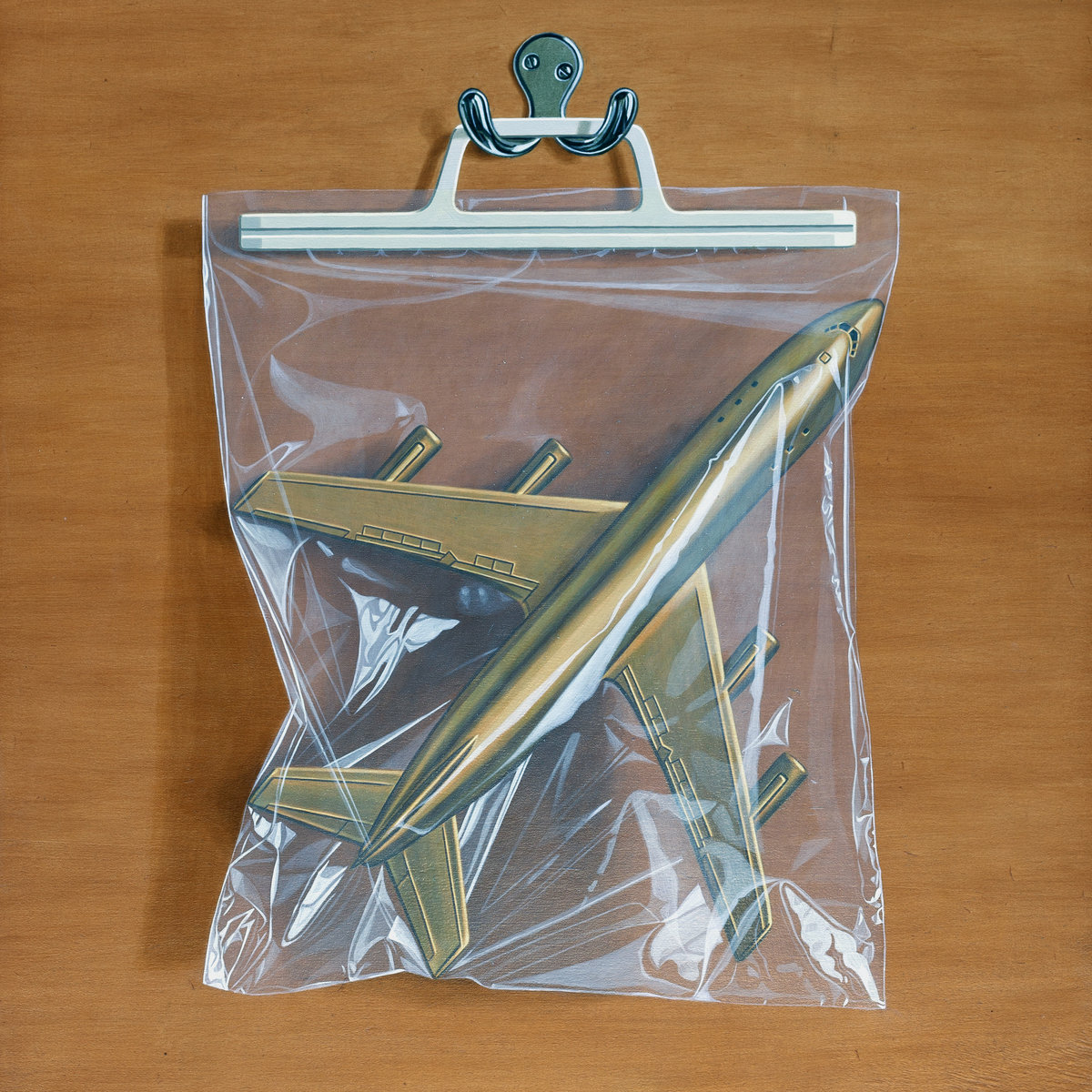
(A Recursive Satire)
Here is Adorno on Stravinsky:
"The fact that Stravinsky fell victim to a process of repression disguising itself as praise is reminiscent of the inane habit of ridiculing obsolete fashions. Employing a backward-looking and in many ways intentionally conventional material, whose very traditionalism gave it a certain similarity to language, he dreamed of a ‘distantiated’ sort of music that might have given that similarity to language the slip. Such music could only have been created in a material wholly divested of language, such as that of contemporary music”.
This is something I've brought up before because, regardless of what one thinks of either man, the idea of critiquing music as it temporalises itself—in the dual sense of portraying time and something that takes time to listen to—is a fascinating one that also seems plainly obvious if you remove the philosophical jargon. If however, you increase the philosophical jargon tenfold, you arrive roughly where Adorno theorises cognition: as moments necessarily distinct from ontological categories. Thought doesn't have to, or rather shouldn't be, subordinated to concrete models, but mediated through them as a historical process. When we hypostatise thought as its concepts, we essentially make it meaningless. This is why moral philosophy or a philosophy that deigns to ask "the big questions" is effectively null, because it exists entirely from without a historical process, and is metaphysical to the point of its own pointlessness. The big questions no longer matter.
Anyway, the thing about pop culture is that it has almost the sole purpose of presentifying time, but in a way that has a constant worry for its future relevance. If Stravinsky portrays a metaphysically dynamic temporality that is materially static, pop culture qua Jameson's "undifferentiated" time is always-already static but with the gambit of trying to make it through a good few turnover cycles. For me, the most fascinating contradiction of the culture industry is that it is gleefully produced by capital while also being deathly afraid of the consequences of capital's reproduction. However, reproductive cycles are near-enough autonomous; whoever's terminology you would like to use, Althusser's ideology, Lyotard's libido, or Adorno's typically dramatic "the system is not that of the absolute Spirit, but of the most conditioned of those who have it at their disposal, and cannot even know how much it is their own", it remains that pop culture is rationally bound to its irrationalism.
What happens, then, if you decide to subordinate yourself to it, free from any coercive predicate? What if you were born with the system at your disposal and then declared it to be the centre of your work regardless: to be "the next Arcade Fire"? In fact, what does it mean to be the next of something that still exists? It of course means to be the agent of the next cycle of capital, to make something irrelevant while ultimately nothing changes. Because, ultimately, nothing changes: the neo-Baroque stylings in the violin rhythms strip Bach of his genuine radicalisms while clashing with the Steve Reich -isms in a way that isn't dialectically mediative but reific pastiche turned into aesthetic. The music makes a conscious effort to detemporalise itself in order to enable the largest selection of play—indeed, "maximalist" is an adjective ascribed to this album often and I agree in a way that is not complimentary, because it thinks maximalism without a historical process. It simply thinks for the greater good of mass popularity without reverence for its source material. However, this isn't Barthesian methodology, it is the conscious subordination of the music to the culture industry. Socioculturally, baroque textures evoke intellectual lushness and minimalism an awareness of the academic, so listeners at all times can feel like they're experiencing more than what they are.
Such transcendence is firmly grounded, however, by the pop culture references in the lyrics. Here the songwriting hypostatises itself to a disingenuous extent, made more so by the fact that the lyrics between the singles to their first album and its actual release were edited (as well as any notion of syncopation from "Sunglasses", lest the next Arcade Fire be mistaken for a band with any actual ambition), and a particularly embarrassing reference to Charli XCX removed from "Basketball Shoes". "She has Billie Eilish style" certainly presentifies the music, but only insofar as it elides it into ontological invariance; we could call it a reference point, but to what end? Billie Eilish style, if it's not something being cognised as ontic only in Isaac Wood's lyrics and is an observable phenomenon, is one of capital—of magazines and photoshoots and high-fashion marketing. If it is relatable it is merely through tautological signifiers bereft of actual meaning, soon to dissapear just as the inclusion of classically-informed orchestration and minimalism here is essentially its death knell. There must, of course, be a benefit of doubt about this, or the suggestion that Wood is aware of the contradiction and is playing with it. I would be sympathetically sceptical of this, if only because the music behind the lyrics is so concerned with not cognising a moment in time—where Billie Eilish style could be mediated as a concept—but reifying one. We do not get the impression that these are songs composed through moments as, for example, in the work of Lutosławski, but turning moments into songs. This, I think, conditions both the lyrics, where any self-awareness is instantly inverted, and the compositions whose essentially identical, plodding structure reflects their stifling, overly conceptual point of origin. The listener is supposed to understand what Billie Eilish style is inherently because it is in the music; the music only existing inside the "is" is the reason that, in the course of an hour, it fails to be stimulating even once.
Thus is ensured the mass consumption of your art with as little effect on the listener as possible—one is now free to insert their own prerogatives into any of the songs because we know that the I-you of each piece is essentially fabricated along with the compositions themselves. The only thing remaining is its clinging on to its own relevancy through insipid self-interpellations. For their part, each song here does ask a big question; they ponder on the meanings of love, death, longing—but so does everything else. When you are in a conscious bid to be a popular band, you enter into this matrix whether you like it or not: the disingenuousness that comes with being born rich makes its way into the very structure of the pondering uncritical cognition in the first place. We get the notion that the speaker of these lyrics is in a relationship he is in denial about being ended, while his addressee does not want his ultimate happiness to be conditioned simply by the relationship existing in-itself. This side-splittingly ridiculous irony is, of course, lost on the band themselves who would for the rest of their days invoke a hundred Arcade Fires, Charli XCXs and Billie Eilishes if it meant they could assume their chart positions.
For the most part, they have. Ants From Up There has been a critical and commercial darling since the second of its release, just as ancient moralisms remain popular because they do not actually approach the level of criticality required of radical cognition in the current historical conjuncture. Yes, what I am describing is literally just pop music, of course. However, pop music for its part is mostly unconscious and all the more entertaining for it, and I generally agree with Henri Lefebvre that the only way out of materialistic society is through the materialistic urge itself: as in, choosing a K-Pop bias is the highest form of praxis because you will stick with them through as many turnover cycles as possible. Instead, this is culturally autogenerative music masquerading as purposeful profundity; cognitive dissonance sui generis. Or maybe, sui genius? After all, one of my favourite aphorisms in Negative Dialectics is "there is no other way to break out of history than through regression". There could then be a kernel of sarcasm in this music that is completely lost in my overly-serious prose, but one must reflect on this crucial fact: the parasocial biases of this album remain in Wood and only Wood. What exactly does that say about those listeners' relationship with the music left behind? If I am to be believed in my perhaps over-eager cynicism, it would be because it was completely empty in the first place.
Works consulted:
Theodor Adorno, "Stravinsky: A Dialectical Portrait", in Quasi una Fantasia; Negative Dialectics; In Search of Wagner
Louis Althusser, Philosophy and the Spontaneous Philosophy of the Scientists